
The Future is Now: How Disruptive Technologies are Transforming Education and eLearning
The traditional classroom model—rows of desks facing a chalkboard—is rapidly becoming a relic of the past. In its place, a dynamic, borderless, and highly personalized digital ecosystem is emerging. Education and eLearning are undergoing a massive transformation, driven by technologies that don’t just upgrade the learning experience; they completely disrupt it.
At R world Software, we are closely monitoring and building the solutions that power this shift. For educational institutions, corporate training programs, and EdTech startups, understanding and integrating these disruptive technologies is no longer optional—it is essential for survival and growth.
Here is a look at the key disruptive technologies reshaping the landscape of education and eLearning today.
1. Artificial Intelligence (AI) and Machine Learning (ML)
AI is arguably the most profound disruptor in the eLearning space, shifting the paradigm from a "one-size-fits-all" approach to hyper-personalized education.
- Adaptive Learning: ML algorithms analyze a student’s performance in real-time, adjusting the difficulty of tasks, suggesting customized resources, and identifying knowledge gaps before the student falls behind.
- Intelligent Tutoring Systems: AI-driven chatbots and virtual teaching assistants provide 24/7 support, answering routine questions and guiding students through complex problem-solving exercises.
- Automated Grading: AI frees up educators' time by instantly grading multiple-choice and short-answer assessments, allowing teachers to focus on mentorship and curriculum development.
2. Immersive Reality: AR, VR, and MR
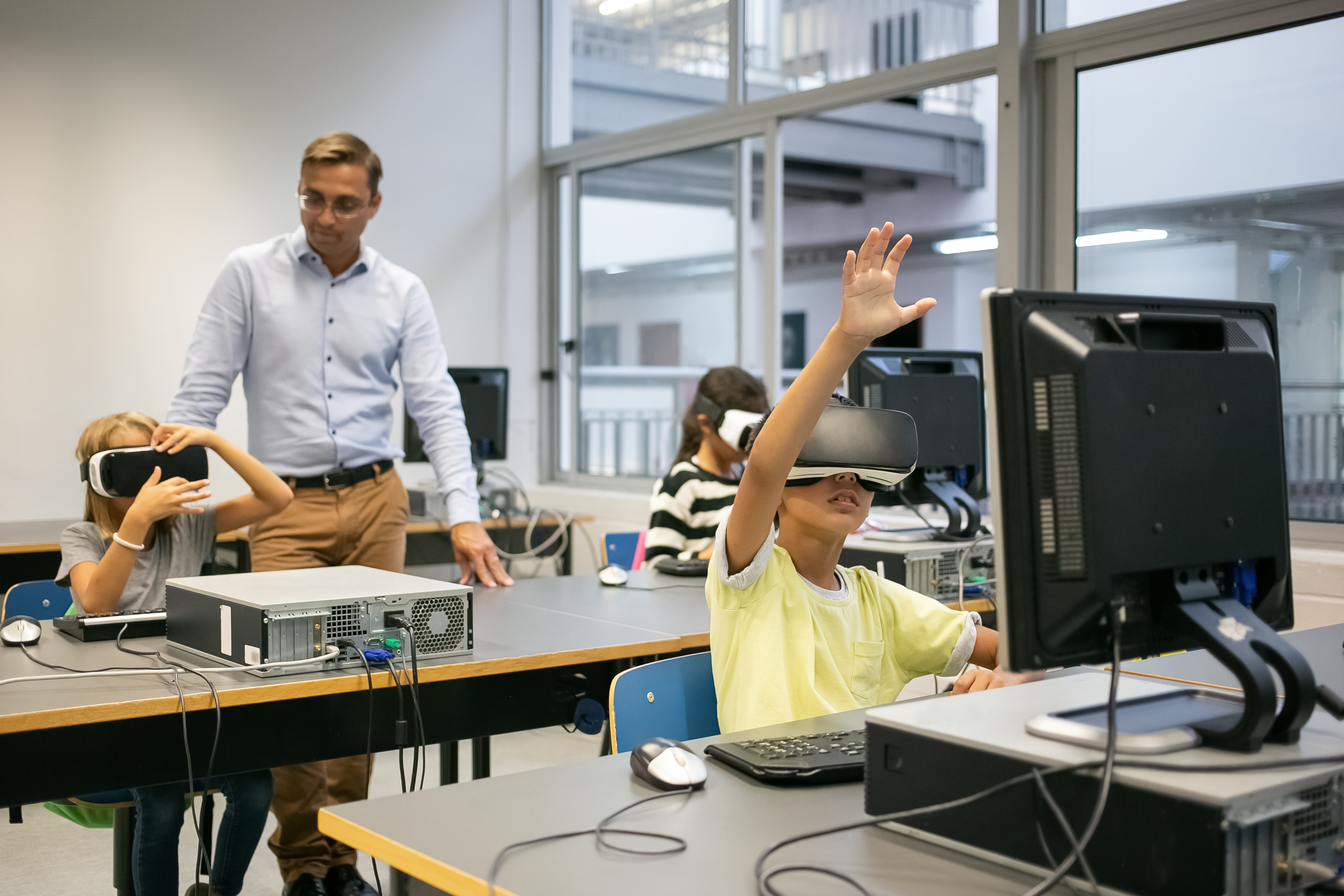
Augmented Reality (AR), Virtual Reality (VR), and Mixed Reality (MR) are breaking down the physical limitations of the classroom, enabling experiential learning at scale.
- Virtual Field Trips: Students can explore ancient Rome, the surface of Mars, or the bottom of the ocean without leaving their desks.
- Risk-Free Training: In fields like medicine, aviation, and manufacturing, VR allows learners to practice high-stakes procedures (like surgeries or machinery repair) in a completely safe, simulated environment.
- Abstract Visualization: AR helps students visualize complex STEM concepts, such as interactive 3D models of the human anatomy or molecular structures, directly on their tablets or smartphones.
3. Blockchain in Education
While primarily known as the technology behind cryptocurrency, Blockchain is uniquely positioned to solve major administrative and security challenges in education.
- Verifiable Credentials: Blockchain creates immutable, tamper-proof records of degrees, certificates, and badges. This eliminates resume fraud and allows employers to instantly verify a candidate's educational background.
- Decentralized Learning Platforms: Smart contracts can automate tuition payments, copyright protection for course creators, and the seamless transfer of credits between different institutions.
4. The Internet of Things (IoT)
IoT is turning physical campuses into "Smart Schools" and bridging the gap between physical and digital learning environments.
- Smart Classrooms: Connected devices (interactive whiteboards, smart HVAC systems, and automated lighting) optimize the physical learning environment for comfort and engagement.
- Resource Tracking: RFID tags and sensors help schools track assets like library books, laboratory equipment, and even monitor student attendance automatically.
- Data-Driven Insights: IoT wearables can track student engagement and focus levels, providing educators with unprecedented insights into how environmental factors affect learning.
5. Gamification and Microlearning
While not hardware-based, the methodologies of gamification and microlearning represent a disruptive shift in how educational software is designed and consumed.
- Microlearning: Breaking complex subjects into bite-sized, 3-to-5-minute modules caters to modern attention spans and the necessity of "learning on the go."
- Gamification: Integrating game mechanics (points, leaderboards, badges, and narrative quests) into eLearning platforms drastically increases retention rates, motivation, and course completion metrics.
Embracing the Disruption with R world Software
The rapid pace of technological change can be daunting, but it presents an incredible opportunity to make education more accessible, engaging, and effective than ever before. To harness the power of these disruptive technologies, organizations need robust, scalable, and intuitive software architecture.
Whether you are looking to build an AI-powered custom LMS, integrate VR modules into your corporate training, or secure your certification process with blockchain, R world Software has the expertise to bring your vision to life.
Ready to revolutionize your educational platform? Contact the team at R world Software today, and let’s build the future of learning together.
Ready to Start Your Project?
Let's discuss how we can help bring your ideas to life